





Key Takeaways
- The four signs of Religious Trauma Syndrome (RTS) show up across emotional, cognitive, social, and functional domains, each affecting a different layer of how a survivor lives, thinks, and relates.
- Emotional signs include anxiety, panic attacks, depression, grief, and persistent shame or guilt, while cognitive signs show up as chronic self-doubt, dissociation, identity confusion, and black-and-white thinking.
- Social signs center on the loss of community, strained family ties, and isolation after leaving a religious environment, while functional signs show up in the body and daily life through sleep disturbances, eating issues, and chronic pain or fatigue.
- RTS often grows out of high-control environments, fear-based doctrine, or spiritual abuse, and a single dramatic incident is not required for the symptoms to be real and worth addressing.
- A Mission For Michael (AMFM) offers specialized, trauma-informed residential and outpatient care for RTS across Southern California, Minnesota, Washington, and Virginia, using evidence-based therapies within personalized treatment plans.
Religious Trauma Syndrome: What You Need to Know
Religious Trauma Syndrome (RTS) is the recognizable pattern of psychological harm that follows exposure to high-control religious environments, fear-based doctrine, or spiritual abuse. It isn’t a formal DSM-5 diagnosis, but it describes a real cluster of symptoms that overlap with conditions like Post-Traumatic Stress Disorder (PTSD), anxiety, and depression, and it deserves serious clinical attention.
The signs of RTS tend to cluster across four domains: emotional, cognitive, social, and functional. Survivors may carry persistent shame and chronic self-doubt long after leaving the environment, struggle with black-and-white thinking and difficulty trusting their own judgment, experience the loss of an entire community in a single moment, and feel the impact physically through sleep disturbances and unexplained somatic symptoms. None of these requires a single dramatic incident to develop; sustained exposure to a controlling system is enough.
We’ll break down each of the four signs with examples further in the article. For survivors ready to begin healing, AMFM Mental Health Treatment offers specialized, trauma-informed care that addresses RTS at every level it shows up, using Cognitive Behavioral Therapy (CBT), Dialectical Behavior Therapy (DBT), and Eye Movement Desensitization and Reprocessing (EMDR) within a personalized plan built around your case.
What Are Examples of Religious Trauma Syndrome?
Religious trauma can emerge from a wide range of religious contexts and experiences, and understanding real-world examples helps make the concept more concrete, especially for survivors who may be questioning whether their experiences “count.”
Some of the most common examples of religious trauma involve:
- High-control or fundamentalist environments where questioning doctrine was forbidden
- Environments where fear was used as a primary motivator, or where strict behavioral rules governed nearly every aspect of daily life.
- Community is weaponized in ways that harm individuals psychologically and emotionally.
- Witnessing or experiencing spiritual abuse at the hands of religious leadership
- Having medical care withheld due to religious beliefs, either for yourself or as a child
- Being pressured into major life decisions (marriage, career, education) based solely on religious authority
- Experiencing sexual abuse within a religious institution
Religious Trauma Syndrome: 4 Types of Signs to Watch Out For
The signs of religious trauma can touch nearly every area of a person’s life. They tend to show up across emotional, cognitive, social, and functional domains. While everyone’s experience is unique, consistent patterns tend to emerge.
1. Emotional Symptoms
Emotional symptoms often include anxiety, panic attacks, depression, grief, shame, and loneliness. A person may experience intense emotions as they process their experiences and grieve how their faith impacted their life. This includes relationships that are forever changed and belief systems that cause harm.
Persistent shame and guilt are especially common. Survivors may feel a pervasive feeling that they are fundamentally wrong or broken, with their inner critic having a loud voice.

2. Cognitive Symptoms
Cognitive symptoms include difficulty making decisions, frequent dissociation, identity confusion, and chronic self-doubt. In high-control religion, people are taught from a young age to suppress their emotions, intuition, and ability to think critically. After experiencing this, individuals may need to rebuild those skills and learn how to trust their own judgment again.
This often appears as black-and-white thinking, an inability to trust one’s own instincts, and a pattern of deferring to others even when personal judgment is clearly appropriate. It is a learned response to an environment that systematically undermines individual agency.
3. Social Symptoms
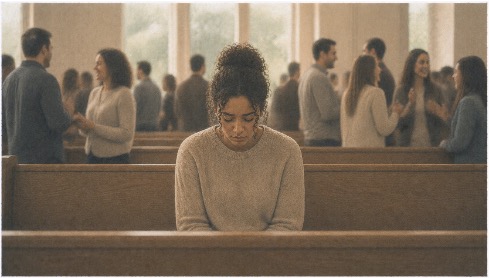
For many people, religion is the center of community. It shapes their closest friendships, family ties, and the rhythms of weekly life. When a person changes or decides to leave a specific religious group, they may lose contact with friends, family, and acquaintances all at once, and the resulting isolation can be profound.
Survivors often have to rebuild community and interests from scratch, which can feel painful and intimidating.
4. Functional Symptoms
Functional symptoms show up in the body and in daily routines. These can include sleep disturbances, eating issues, and somatic complaints like chronic pain or fatigue. Recognizing these symptoms as real responses to past harm, rather than personal failings, is often the first step toward healing.
Religious Trauma Syndrome Signs: Summary Table
| Symptom Type | Common Signs |
| Emotional | Anxiety, panic attacks, depression, grief, persistent shame and guilt, loneliness, fear of divine punishment |
| Cognitive | Difficulty making decisions, dissociation, identity confusion, chronic self-doubt, black-and-white thinking, inability to trust personal instincts |
| Social | Loss of community, strained family relationships, difficulty forming new friendships, isolation, struggles fitting into secular spaces |
| Functional | Sleep disturbances, eating issues, somatic complaints like chronic pain or fatigue, difficulty managing daily routines |
Why AMFM Is the Right Place to Start Healing

Religious trauma is real, the signs are valid, and the impact on your emotions, thinking, relationships, and body deserves serious clinical care. Healing isn’t about swapping one rigid worldview for another; it’s about reclaiming the freedom to think, feel, and live on your own terms. That’s the foundation AMFM was built on, offering specialized, trauma-informed care designed specifically for survivors of religious trauma.
Our clinical team builds a personalized plan for your case, rooted in evidence-based therapies such as Cognitive Behavioral Therapy (CBT), Dialectical Behavior Therapy (DBT), and Eye Movement Desensitization and Reprocessing (EMDR), with both residential and outpatient programs available across Southern California, Washington, Minnesota, and Virginia. We are accredited by The Joint Commission and the California Department of Health Care Services, so you’re starting your recovery with a team committed to clinical excellence and safety at every step.
Frequently Asked Questions (FAQs)
Is Religious Trauma Syndrome a Clinical Diagnosis?
Religious Trauma Syndrome is a framework that can describe a recognizable pattern of symptoms, but it is not a formal diagnosis listed in the DSM-5-TR or ICD-11. Its emotional, cognitive, social, and functional signs may overlap with conditions that are formally recognized, such as PTSD, anxiety, and depression.
How Do You Tell If You Have Religious Trauma?
The clearest indicators are the ones that persist long after you’ve left a religious environment. Watch for chronic shame or guilt disconnected from any specific behavior, difficulty trusting your own judgment, intense anxiety around religious topics, ongoing black-and-white thinking, or a persistent sense that you are fundamentally broken. If several of these patterns feel familiar, speaking with a therapist who has specific experience in religious trauma is a worthwhile next step.
What Triggers Religious Trauma?
Triggers can be surprisingly wide-ranging and often include religious imagery, language, or music from the traumatic period, being around people who still practice the religion you left, or attending religious events like weddings and funerals. Internal triggers are equally common and sometimes more disorienting, since experiencing doubt, making a personal choice your former religion would have condemned, or simply feeling happy and free can paradoxically bring up guilt or fear. Understanding your personal triggers is an important part of healing, and a trained therapist can help you map and work through them.
How Do I Deal with Religious Trauma?
Healing takes time and rarely happens in a straight line, so the most important first step is finding a therapist who understands religious trauma specifically. Approaches that show meaningful benefit include trauma-focused cognitive behavioral therapy (TF-CBT), Eye Movement Desensitization and Reprocessing (EMDR), and somatic therapies that address how trauma is stored in the body. Rebuilding a personal value system you have chosen freely, along with connecting to support groups or peer spaces for survivors, helps reduce the isolation that often comes with RTS.
Can AMFM Help Individuals with Religious Trauma Heal From It?
Yes. A Mission For Michael (AMFM) offers specialized, trauma-informed mental health treatment designed to support individuals working through complex trauma, including religious trauma, with a nuanced and individualized approach.