





What Families Wish They Had Known Prior to Supporting a Loved One With Bipolar Disorder
Just because you know or live with someone who has been diagnosed with bipolar disorder does not necessarily mean you would know the most effective ways to support them. Even asking them basic questions can potentially lead to difficulties:
- “Would company help?”
- “When should you give someone space”
- “When should you call for advice?”
We appointed Cherry Data Signals to carry out a survey of 1,032 respondents who know or care for someone with bipolar disorder. Our extensive study looked into how supporters of people with bipolar disorder make decisions – we also wanted to find out about the guidance they initially received, and asked them, in hindsight what they wish they had known about earlier.
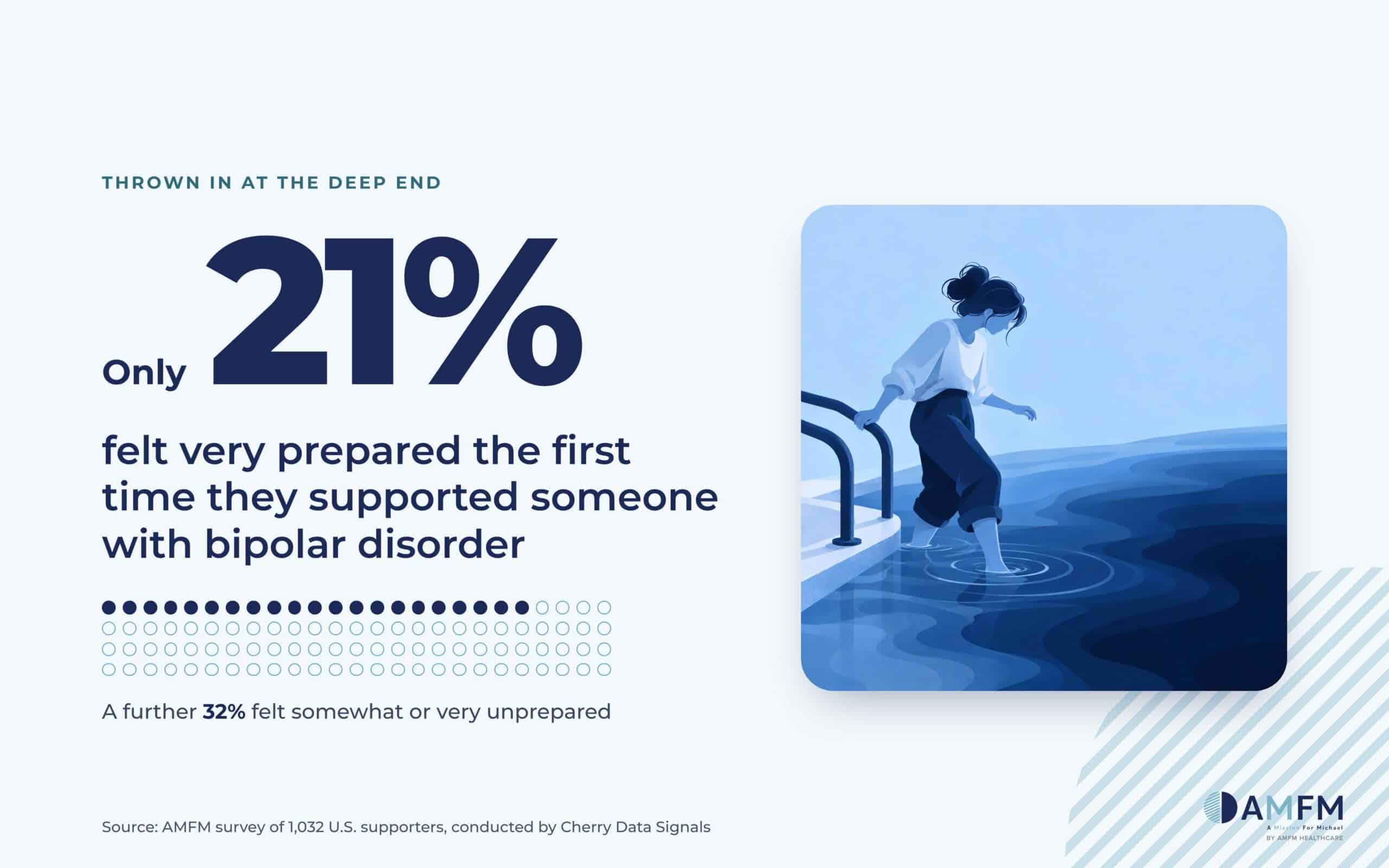
Just over 1 in 5 (21%) respondents admitted they felt very prepared when they first had to deal with someone close to them with bipolar disorder. The research found that knowing what to say during a difficult period was among the hardest aspects for 42%, while 40% struggled with knowing when to step in and when to give space.
We also found that this uncertainty extends to supporters’ very own needs. Indeed, over 2 in 3 (71%) admitted they had held back from discussing their own difficulties with others. However, helping to support someone with bipolar disorder also brought positive experiences for some respondents: 36% said it gave them a greater understanding of what the other person was going through, while a further 33% said they felt closer to them.
The people we surveyed in this study were not confined to spouses – they were also relatives and close friends.
One of the clearest signals to emerge from the study data was that people who support others with bipolar disorder most want practical guidance to help manage the condition: they want more information on how bipolar disorder affects the person, advice on how they can provide the best support before an emergency, and knowledge of where both sides can turn for help.
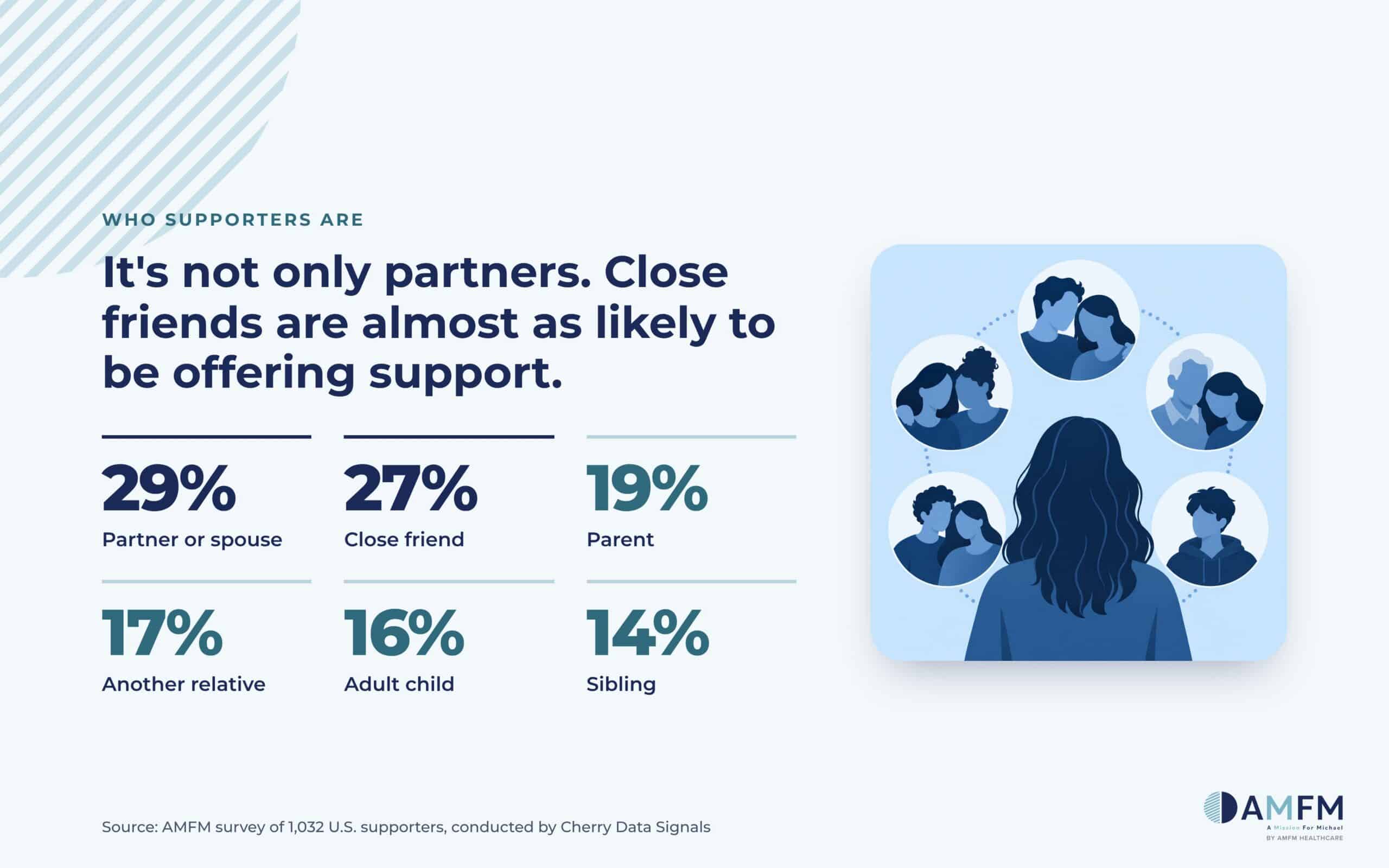
How The Research Was Conducted
The analysis draws on an online panel survey of 1,032 U.S. respondents – the survey screened respondents to identify those who support someone close to them with bipolar disorder.
Note that respondents could select more than one answer for several questions, so the percentages for those questions can add up to more than 100%. Figures are rounded to the nearest whole percentage; combined categories are calculated before rounding.
The findings reflect respondents’ recollections and perceptions. They do not establish whether particular support approaches caused better outcomes, and should not be treated as estimates for all U.S. supporters.
Feeling Prepared is Far From Universal
One of the initial questions we asked respondents was to think back to when they first provided support to a loved one with bipolar disorder. The results revealed that over 1 in 5 (21%) felt “very prepared” and 25% felt “somewhat prepared”. Another 21% felt neither prepared nor unprepared. Thirty-two percent stated they felt “somewhat unprepared” or “very unprepared.”
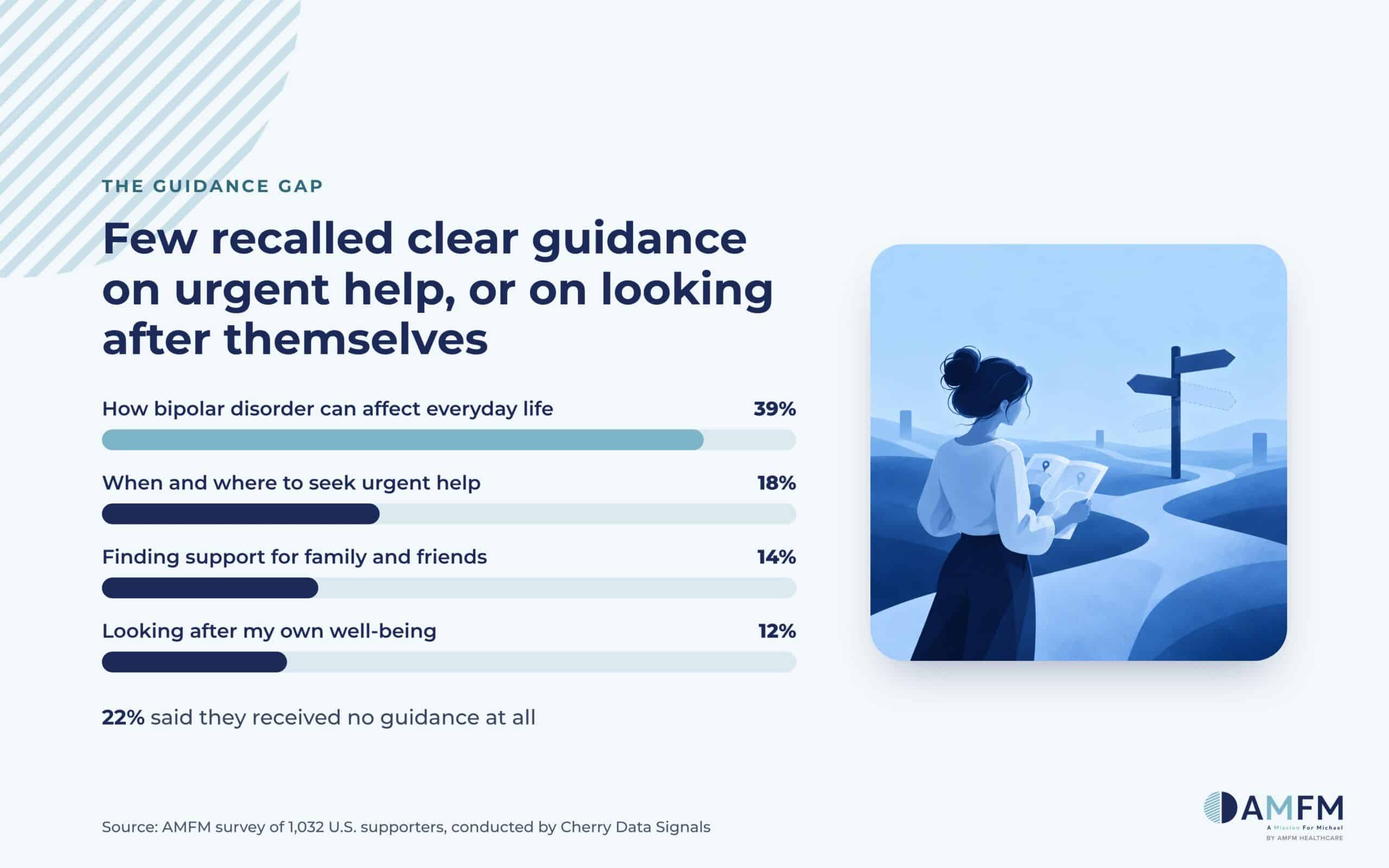
When survey respondents were asked about the guidance they had previously received, 39% recalled clear guidance from either a healthcare professional or a mental health organization about how bipolar disorder can affect everyday life. Another twenty-eight percent stated they had received guidance on recognizing the signs and symptoms of someone who may be becoming unwell.
- Only 18% recalled receiving clear guidance on when to seek urgent help for the person they were supporting and who to contact.
- Another 22% said “I did not receive any guidance,” while 6% selected having received guidance that did not feel clear.
When respondents were asked about their own situation, the numbers were considerably lower.
- Only 14% of respondents recalled receiving clear guidance on where to find support for themselves as a family member or friend of someone with bipolar disorder.
- And just 12% said they recalled advice on looking after their own well-being.
Being close to someone with bipolar disorder can have significant impacts on the supporters too. Supporters need information about their own options, in addition to guidance on helping their loved one.
“It is not just people who have bipolar disorder that require support – their loved ones need help too,” says Anand Mehta, LMFT, Executive Director at A Mission for Michael. “Supporters of people with bipolar disorder should have options of where to turn to, should they be struggling themselves.”
Families Want to Understand the Individual
Families can get a head start on the dynamics of bipolar disorder by gaining a basic understanding of the condition. The National Institute of Mental Health[1] describes the condition as one that can involve significant changes in mood, energy and activity, with symptoms that can vary in intensity. Symptoms can vary considerably among those affected – the condition requires listening to their experience and discussing what changes are significant for them.
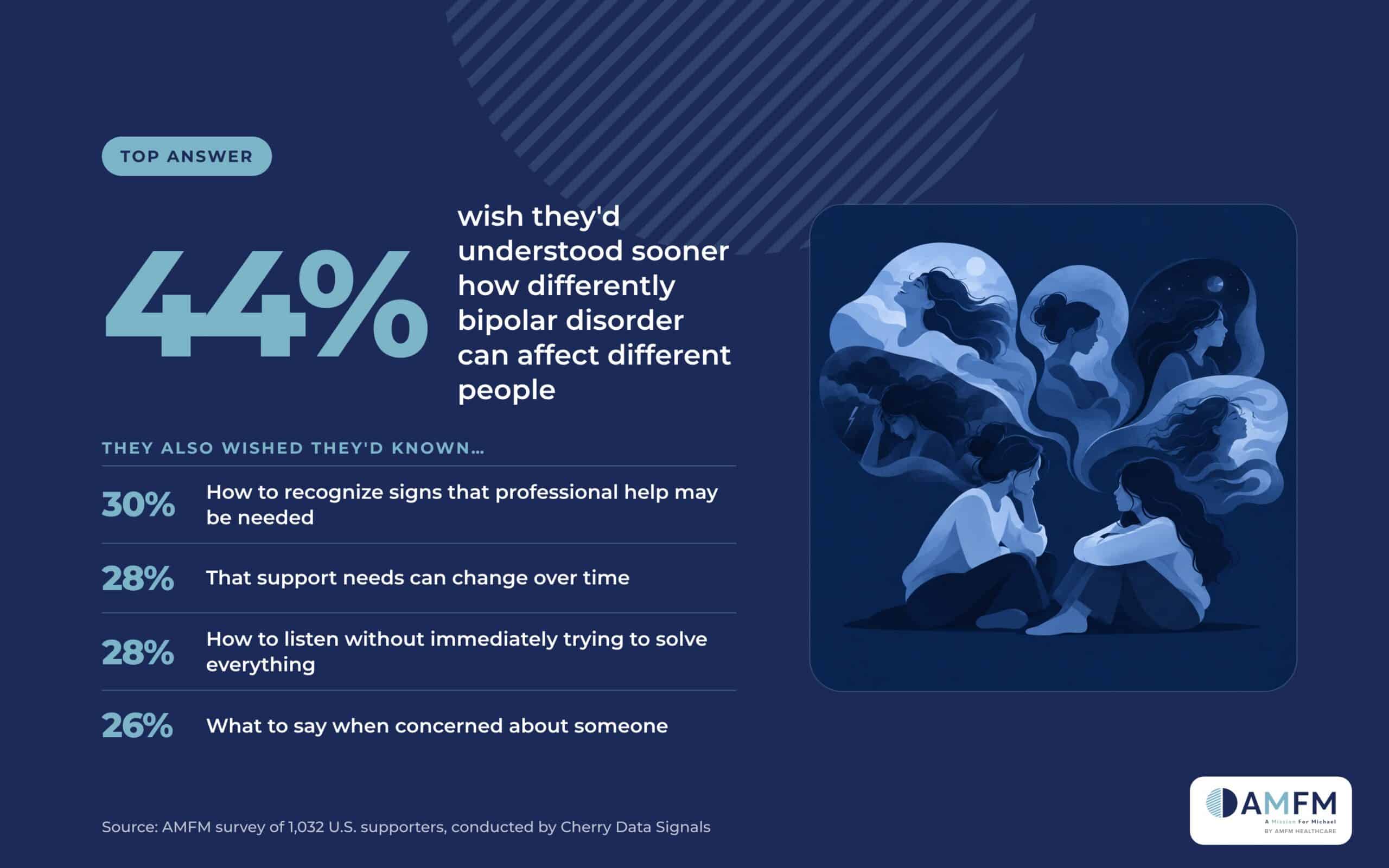
We wanted to gauge from family members what they wish they had known earlier about their loved one’s bipolar diagnosis. The top answer, selected by 44% of respondents, was that they had wished they had known sooner that bipolar disorder can affect people in significantly different ways.
That statistic aligns with a more specific set of concerns. For example, almost 1 in 3 (30%) said they had wished they had understood earlier how to recognize initial signs that professional help might be needed. Changing support needs were selected by 28%, and 20% wished they had known how to support someone without taking over.
One eye-opening statistic to emerge from the study was that many families disclosed that one of the most challenging aspects of caring for a loved one with bipolar disorder is simply to comprehend what their role should be when it comes to caring for them. Eighteen percent confided that they had wished they had known after the diagnosis about the types of support they could offer, and the point at which professional help would be needed.
Even decisions which occur daily can lead to uncertain outcomes. For example,
- Would their partner welcome company at an appointment, or prefer to go alone?
- Is the optimum decision to offer them practical help, give them the option of someone to listen, or just give them space?
Having a frank initial discussion about the disorder can help both sides understand what is wanted during an episode, and what can realistically be offered.
Knowing What to Say is a Leading Difficulty
We also wanted to gauge the specific challenges supporters of those with bipolar disorder face.
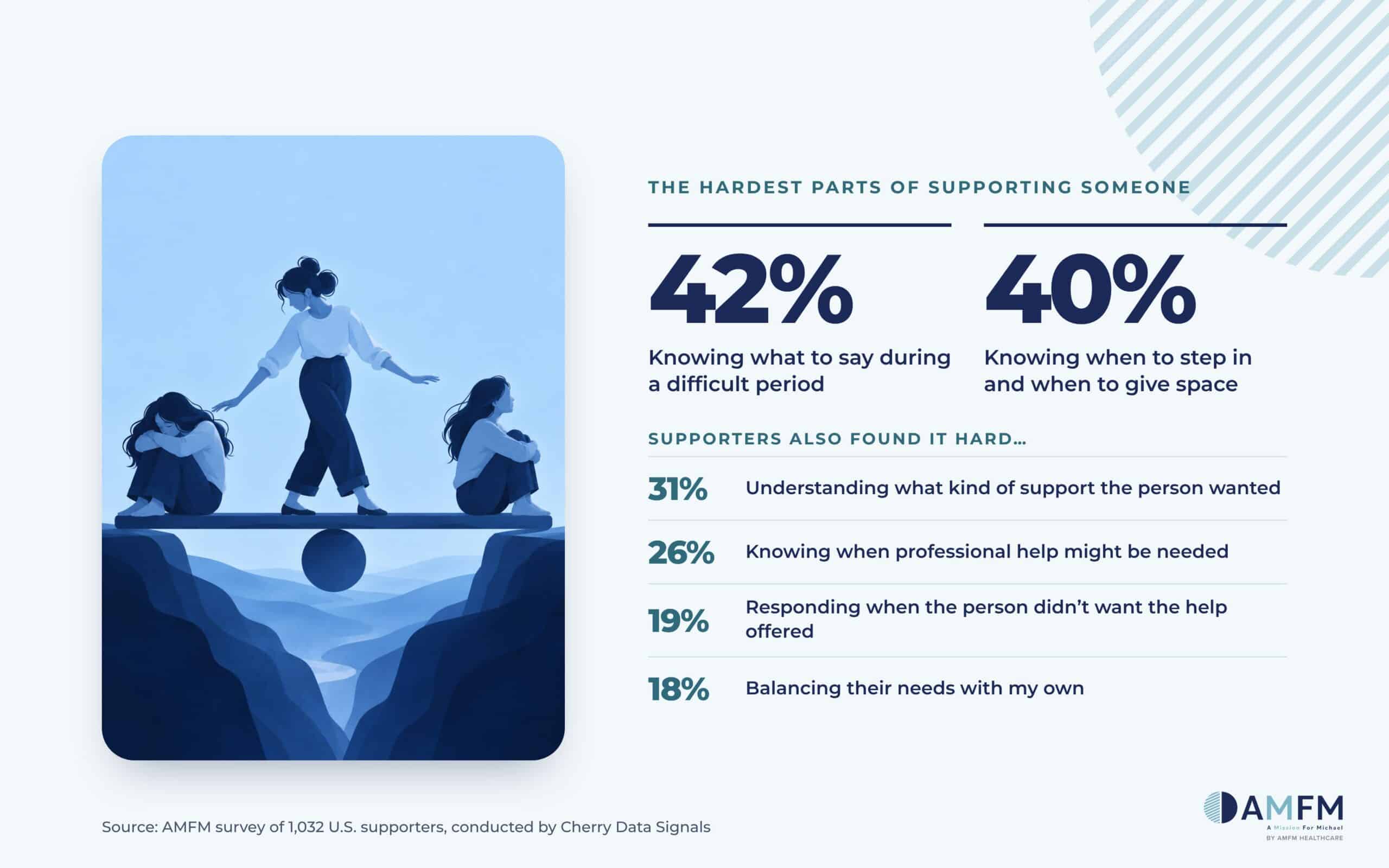
The biggest challenge, according to the data, was simply knowing what to say during a difficult period – this was selected by 42% of respondents. The second biggest challenge was judging when to step in and offer help, and when to step back and give space – as selected by 40%.
For 31%, the challenge is understanding what support the person actually wants. And a further 19% said they do not know how to respond when their offer for help is shunned – it shows that when it comes to bipolar disorder, wanting to does not necessarily equate to knowing how to.
In hindsight, 28% of people we surveyed said they regret not knowing how to listen without immediately trying to solve everything. Meanwhile, 26% wished they had known what to say when they were concerned.
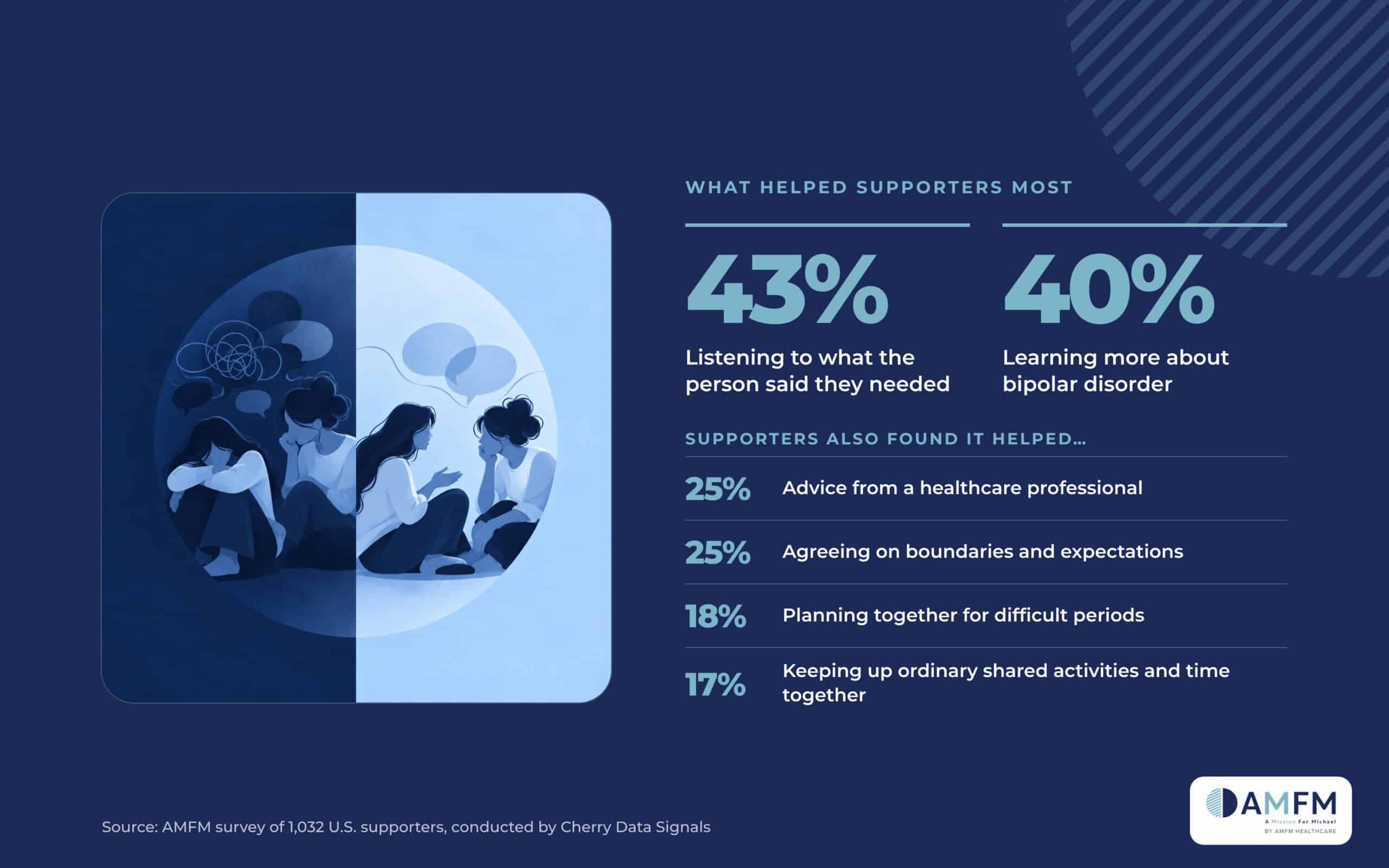
When respondents were asked what had helped them most in supporting someone with bipolar disorder, the top-ranked response, selected by 43%, was listening to what the person said they needed. Learning more about bipolar disorder followed at 40%.
When we step back and consider these responses overall, they suggest that for many supporters it is about striking the right balance – that is – one between offering help and letting the other person explain what would be useful.
“Families often worry about saying the ‘correct thing’,” says Mehta. “Often, a good starting point is simply to ask their loved one whether they want to talk, want practical help or would prefer time alone. The main takeaway being that you should not feel guilty about not finding a solution to every problem.”
Where Supporters Turn to For Advice
We wanted to find out where people turn to for advice in dealing with bipolar disorder. The most common source, selected by 27%, was the person they were supporting. Twenty-six percent stated they had accessed information from websites dedicated to providing health information.
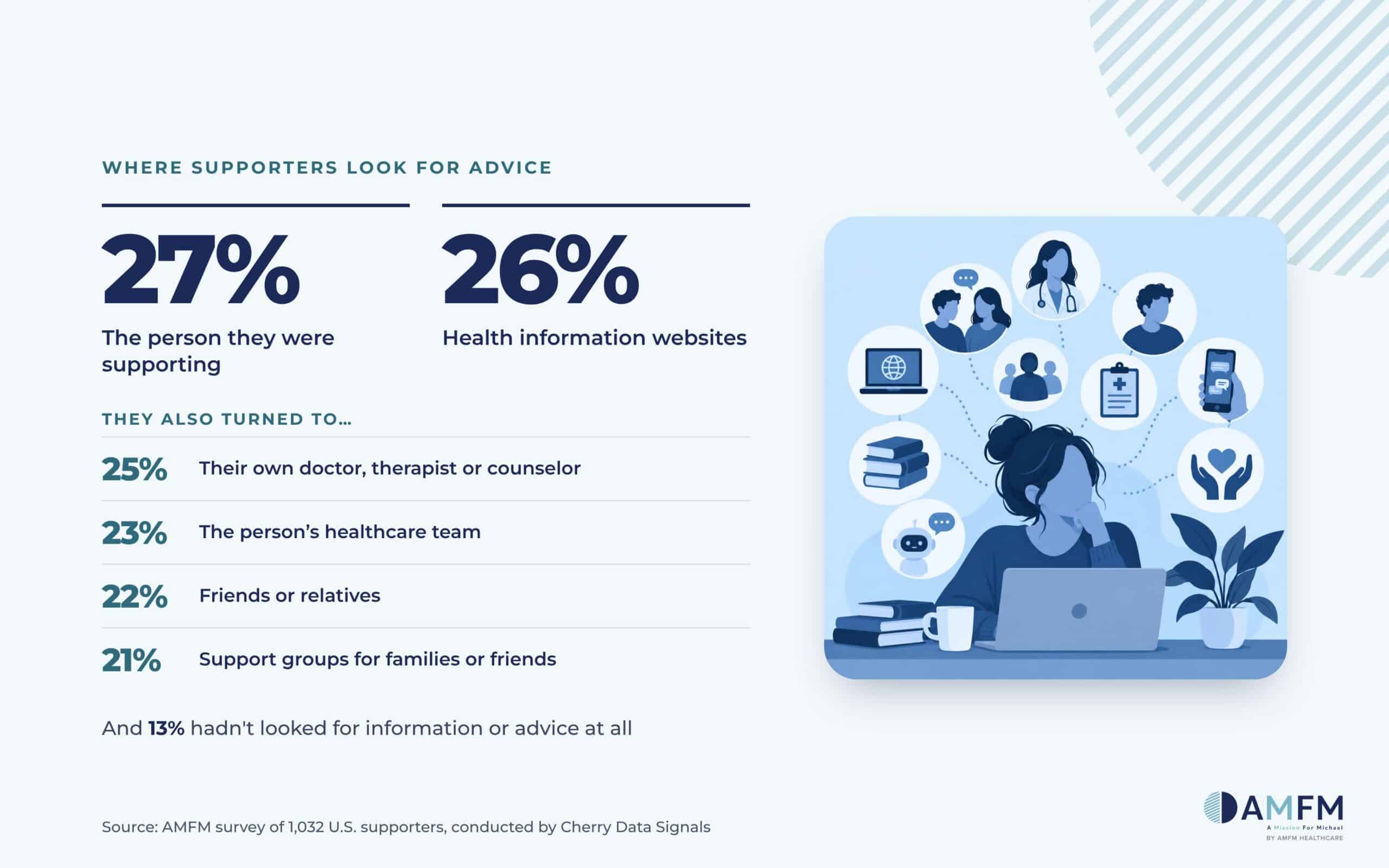
Another frequently cited source of information was dedicated healthcare professionals: a quarter of respondents relied on advice from their personal physician, therapist or counselor, and another 23% depended on advice from the same healthcare team that was supporting their loved one with bipolar disorder.
Friends and families were a popular choice for 22% of respondents, and 21% said they turned to support groups. Twenty percent accessed information provided by mental health charities or advocacy organizations. A smaller percentage visited online platforms, which included social media or online forums (14%), and AI tools or chatbots (6%) – a surprisingly low figure considering numerous news reports have discussed how so many Americans rely on LLMs to diagnose their own health issues.
The study results show how there are many options for people who want to know more about bipolar disorder.
Note that these figures describe where people looked for help, rather than how useful or reliable they found it.
A not-insignificant 13% admitted that they had not looked for information or advice. Our survey did not establish why.
Planning for Difficult Periods
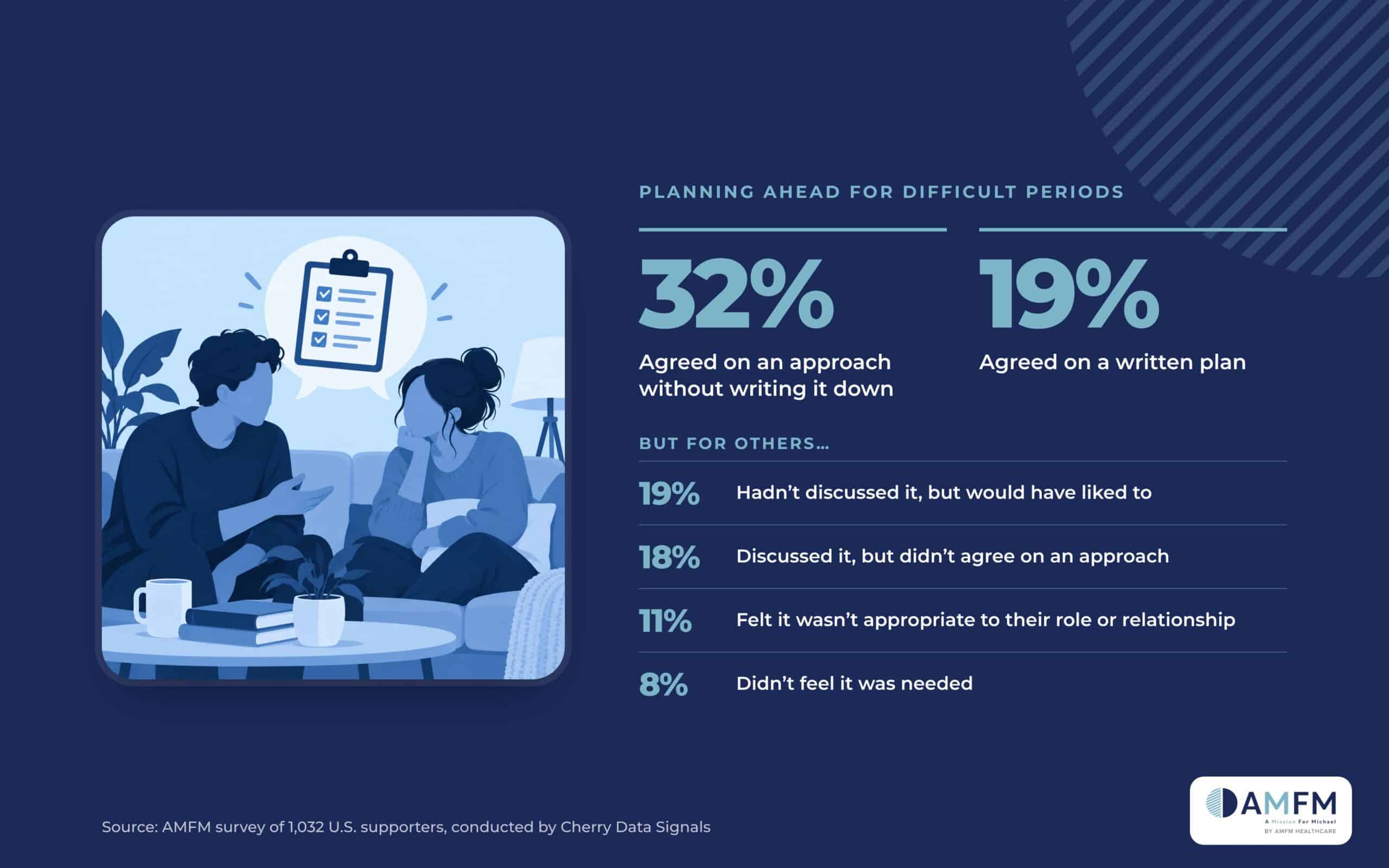
We found that many respondents had made plans on what to do if their loved one became unwell. For example, 1 in 3 (32%) had informal agreements in place of how to act. Another response, selected by 19%, was that they had a written plan in place.
However, some respondents had not agreed on any approach. Eighteen percent selected having discussed support without agreeing on an approach, and 19% selected not having discussed it but wishing they had.
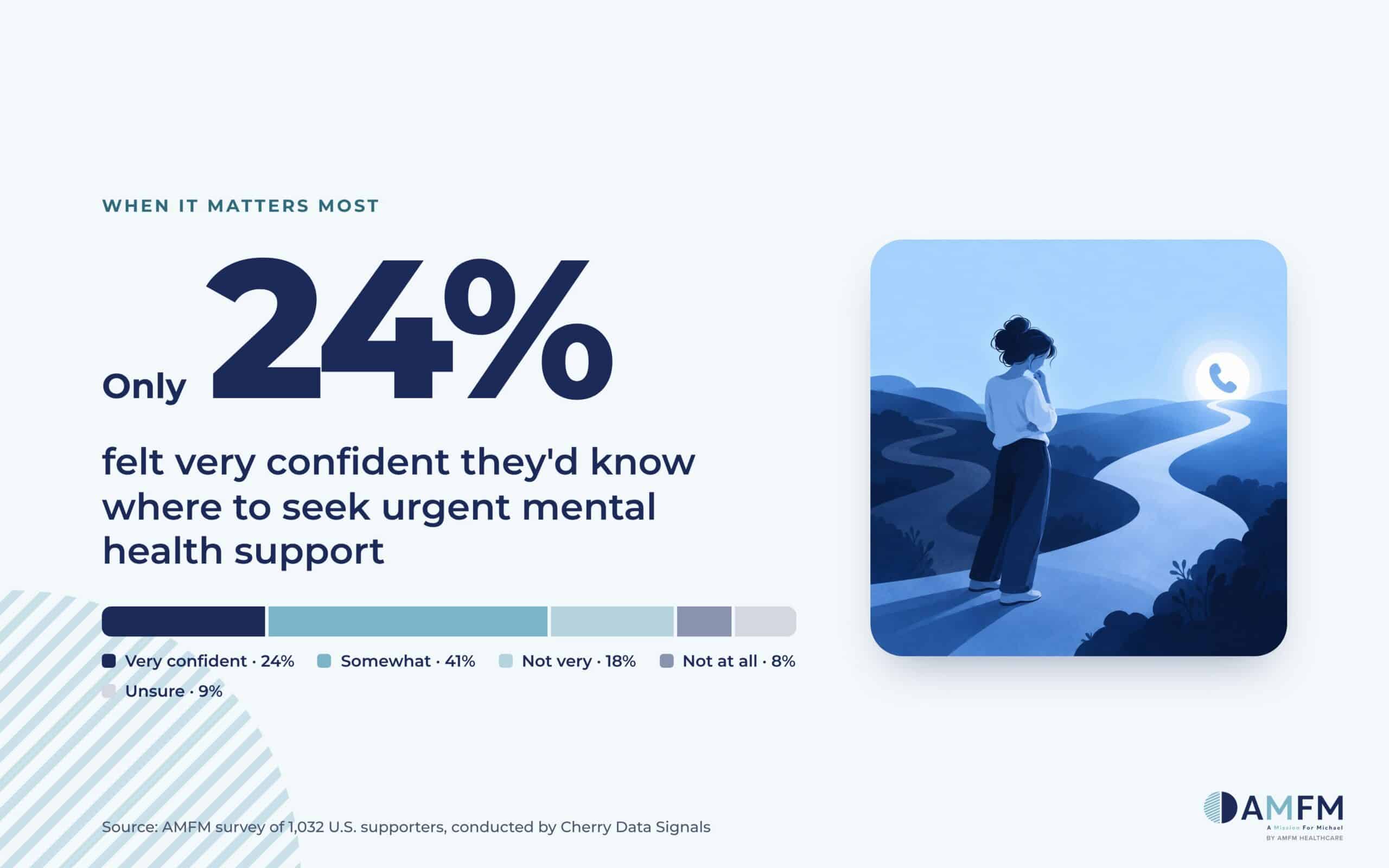
During more extreme bipolar episodes, knowing where to seek urgent help was another area of uncertainty. Although 65% felt at least ‘somewhat confident’, only 24% felt ‘very confident’. A further 26% were ‘not very’ or ‘not at all confident’, and 9% were unsure.
Having a plan in place, particularly in more extreme situations, often warrants very specific decisions. For example:
- What changes should prompt concern?
- Who should be contacted?
- Who does the person want involved?
The National Alliance on Mental Illness (NAMI)[2] provides a crisis-planning guide for people with mental health conditions and their loved ones. It covers warning signs and includes forms for recording a crisis plan and treatment information. Any instructions about treatment should come from the care team.
Having plans in place, whether they are informal or formal in nature, can be very useful before help is urgently needed,” says Mehta. “Who to call during an emergency? Who does your loved one want involved? A pre-emptive plan gives everyone something clear to refer to if there is an emergency, particularly when emotions are running high.”
Supporters Often Keep Their Own Difficulties Quiet
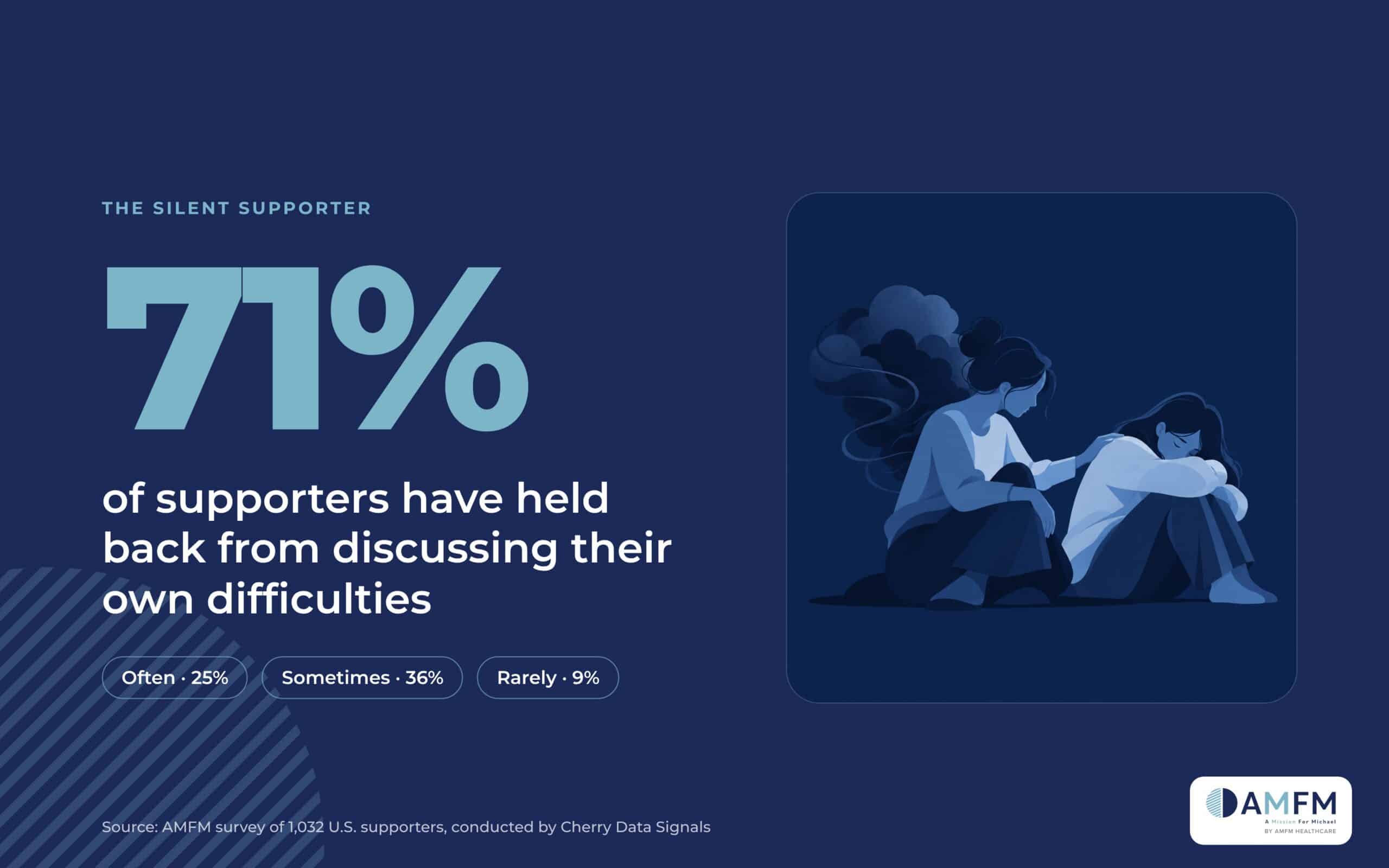
As aforementioned, those who have bipolar disorder are not the only ones in the dynamic that require support. A staggering 71% of respondents we polled admitted they had purposely held back from discussing their own difficulties, at least rarely. This included a quarter of supporters who had done so often and 36% who had done so sometimes. The remaining 29% said they had felt able to discuss difficulties when needed.
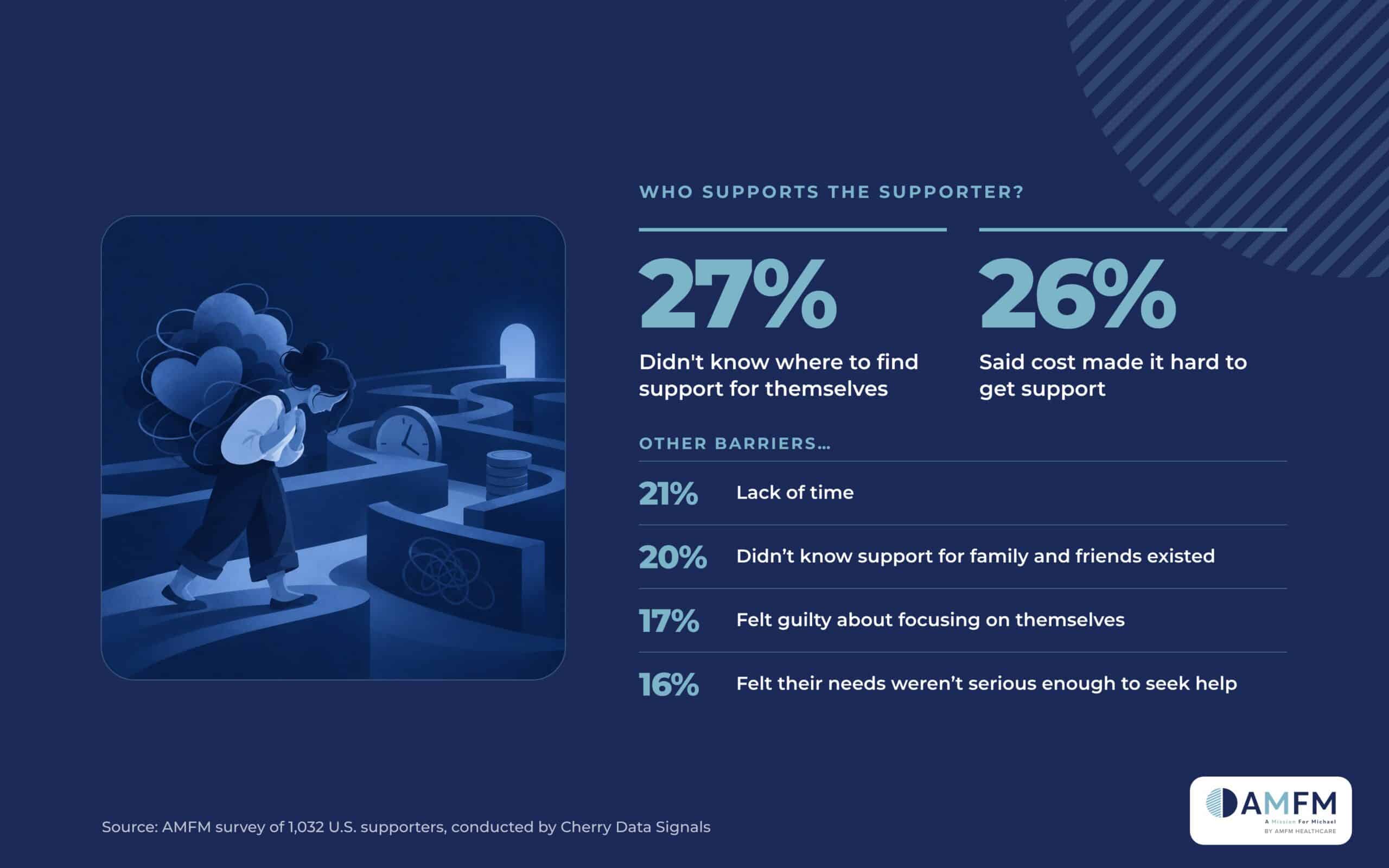
A separate question we asked sought to explore the challenges they face when attempting to access support themselves. The most common challenge, cited by 27%, was not knowing where to find help in the first place. Cost is another major barrier, affecting 26%, and lack of time, according to 21%. One in five had not known that support for family members and friends exists.
Other reasons for not getting the support they need were more personal. For example, 17% said they would feel guilty about seeking help for themselves, and 16% felt their needs were not serious enough to justify help. Another 13% were concerned about sharing their loved one’s private information.
Finding suitable help can also be difficult – for example, 12% struggled to find support relevant to their relationship or circumstances.
These findings may help explain why for so many, a general suggestion to “get help” may be insufficient. Supporters need to know in the first place what help is available, how much it costs, and whether they can find a balance between seeking help for their own difficulties while respecting their loved one’s privacy.
Agreeing on boundaries and expectations was helpful for a quarter of respondents (25%). However, just 18% recalled receiving clear guidance on setting them. In hindsight, 17% said they wished they had known how to set boundaries without feeling guilty about them – the same proportion would have wanted advice on boundaries and realistic responsibilities.
“Caring for someone with bipolar disorder can leave supporters tired, worried or unsure what to do,” says Mehta. “It is important that they find an outlet – somewhere to discuss these feelings, and clear information about the potential support they can access.”
Supporters Feel Closer to Those They Support
We wanted to gauge how supporters of people with bipolar disorder feel emotionally. Twenty-eight percent said they worry about whether they are doing the right thing, while 20% disclosed that they regularly feel emotionally overwhelmed. Twelve percent said they feel alone.
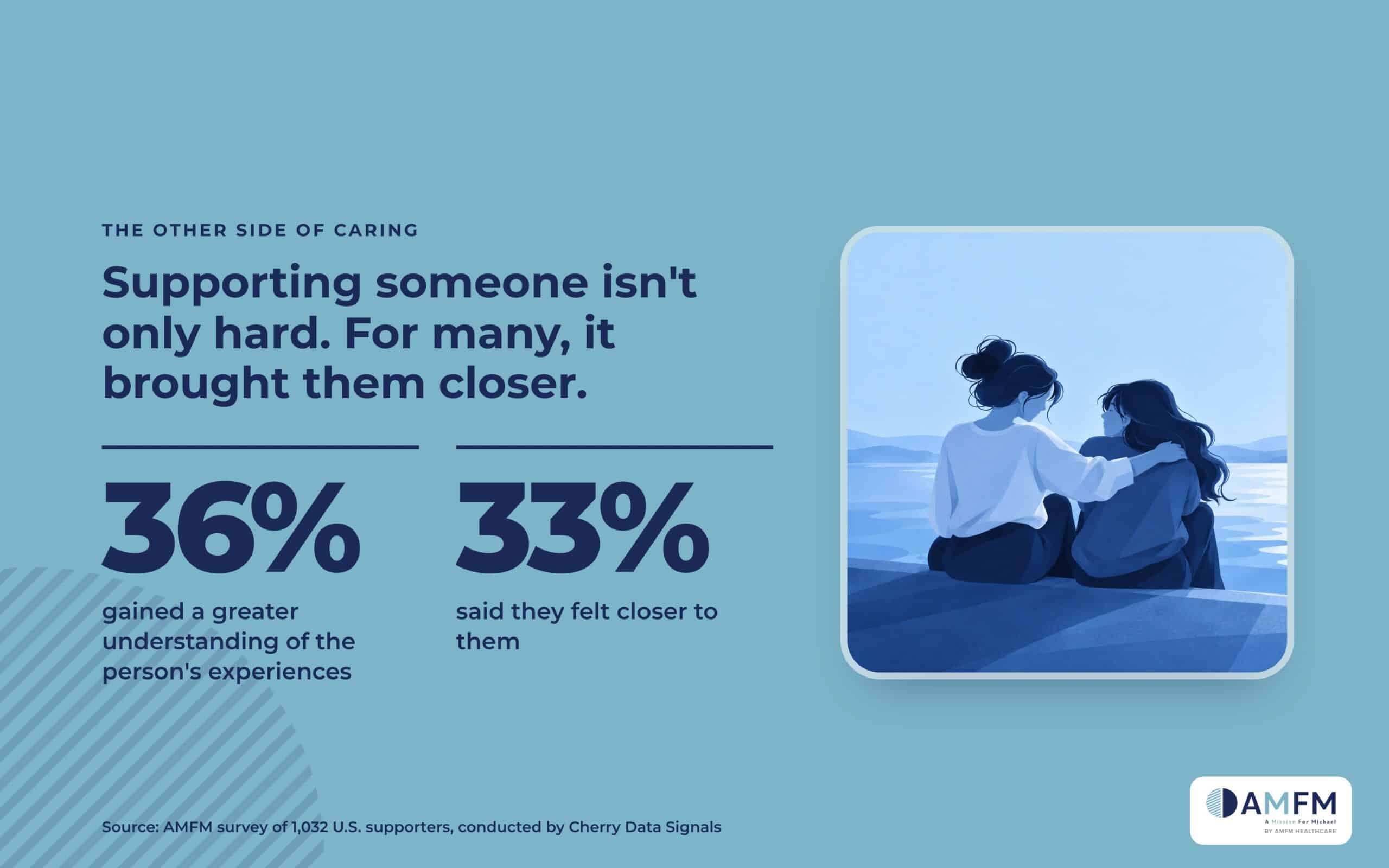
But supporting someone with bipolar disorder is not a universally negative experience. Over 1 in 3 (36%) reported a greater understanding of the other person’s experiences, and 33% reported feeling closer to them.
Another 28% reported more confidence in handling difficult situations, and 25% felt valued or appreciated.
These experiences are not mutually exclusive. Respondents in the survey were given several multiple choice options to choose from – this means that someone who felt worried or overwhelmed could also report greater closeness.
Spending time together matters greatly too. Seventeen percent said maintaining shared activities and time together had helped develop their relationship.
Resources People Wished They had Received
Looking back, respondents were asked on what would have made the biggest difference when they first began providing support to their loved one – 39% stated they wished they had accessed a straightforward guide to bipolar disorder.
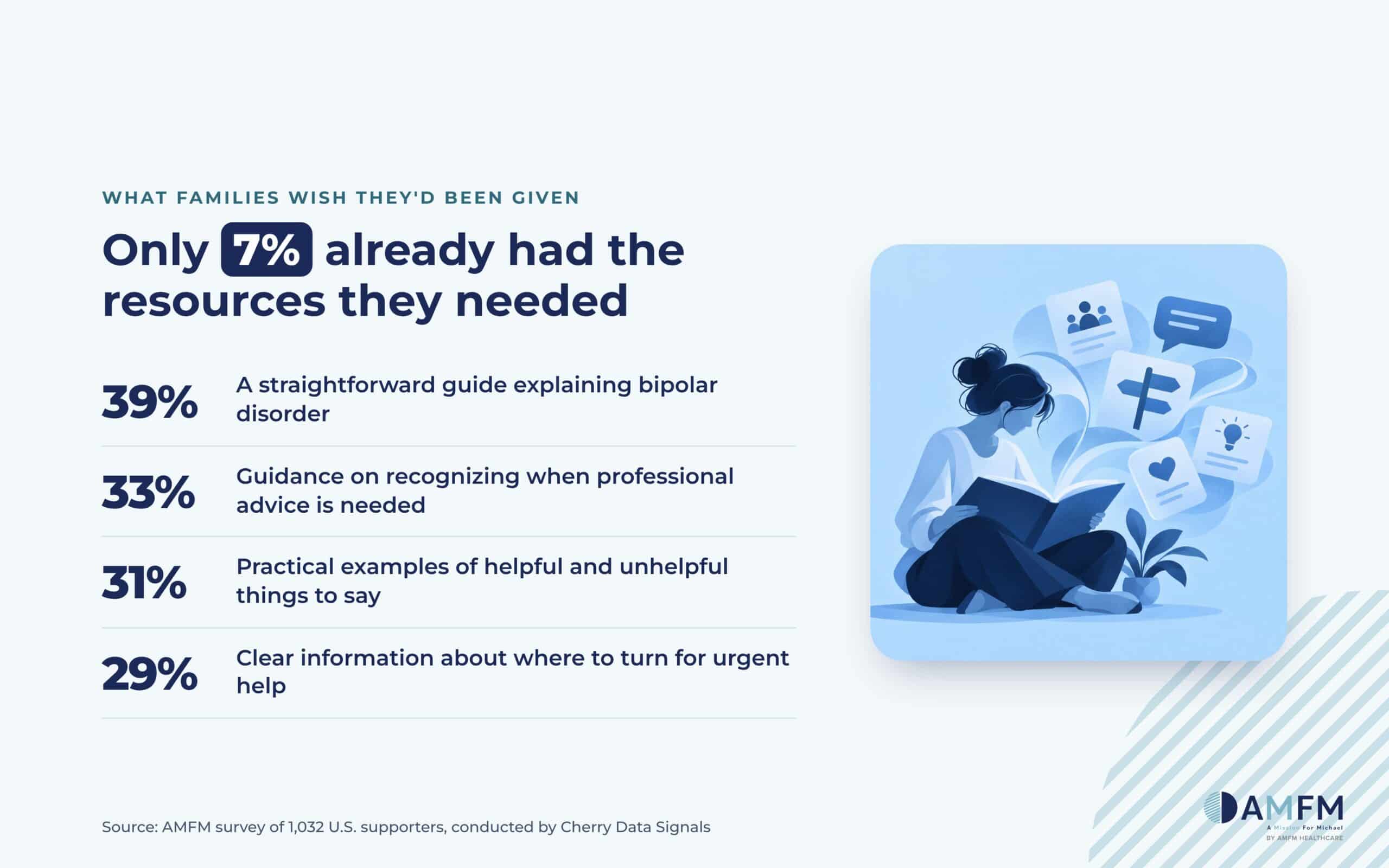
Recognizing when professional advice was needed was cited next, by 33% of respondents. Another 31% said they wanted practical examples of helpful (and unhelpful) things to say.
A further 29% acknowledged that in hindsight, they would have wanted clear information about who to go to for urgent help. Twenty-two percent said creating a support plan together would have helped. Another 17% disclosed that they would have wanted advice on boundaries and realistic responsibilities.
There was also regret for a chance to talk things through: 15% said discussing the condition with a healthcare professional would have made a significant difference.
Only 7% concluded that they already had the resources they needed.
Practical Checklist for Partners, Friends & Families
Ask what help is welcome.
Try to be as open as possible with your loved one about what they would find useful, in contrast to what they would prefer to manage themselves.
Be clear about what you can offer.
You can discuss both practical responsibilities and your limitations – these could include your availability, as well as the times when you may need additional support from elsewhere.
Prepare questions for the care team.
It’s a good idea to write down a list of questions you have before your meeting with the care team. The meeting is an opportunity to bring up anything that you don’t understand – this could include where and when to ask for professional advice.
Keep contact details accessible.
During highly emotional episodes, knowing who to contact if you are worried means you can be prepared with the correct phone numbers on hand.
Discuss privacy and involvement.
It is important to discuss with your loved on about who they want involved in their care going forward, and the information about their health that they are happy to have disclosed.
Look after your own well-being.
It is something supporters often neglect – looking after themselves. Try to make time for rest, don’t be ashamed to seek support for yourself when you need it, and continue doing things you enjoy together.
NIMH’s guidance[1] for loved ones includes listening, offering practical help, sharing enjoyable activities and caring for their own well-being. NAMI[2] also provides a crisis-planning guide with information on warning signs and practical planning forms.
Frequently Asked Questions
What if I do not know what to say?
The good news is, according to our survey data, you are not alone: 42% of respondents identified knowing what to say during a difficult period as a challenge. A positive way to approach this is simply to ask how your loved one feels, and what they would find useful from you. Note that no one expects all problems to be solved as a result of just one conversation.
Should we make a support plan together?
A written plan that can be referred to can be useful. It preemptively records what help the person wants, the warning signs to look out for and whom to contact if concerns arise. When things are calm, get together with your loved one and their care team or anyone else the person feels comfortable involving.
Is it reasonable to seek support for myself?
An unequivocal yes. Supporting someone does not mean you have to manage your own difficulties alone. NIMH[1] advises loved ones to look after themselves too. And this is not something you need to address on your own – your own healthcare provider or a family support group may be a good starting point.
What should I do if help is urgent?
In the United States, you can call or text 988, or use the chat service at 988lifeline.org, for crisis support. You also have the option of contacting the service if you are worried about someone else. For emergency situations, such as if there is immediate danger or a medical emergency, you should always call 911 or go to the nearest emergency department.
Takeaways from the Study with Supports of those with Bipolar Disorder
One of the biggest conclusions to emerge from our study is that what supporters most want is clear answers to everyday questions, such as what to say, when help can be offered, when to give the loved one space, and when the right time is to contact a professional.
But supporters of people with bipolar disorder also need guidance for their own mental well-being. Our study found that many did not even know that help for them was available. Others said they had feelings of guilt for even thinking about seeking help for themselves; others faced cost and time pressures.
For supporters, understanding their own role is just as important; moreover, knowing their limits is an important part of what they wished they had learned earlier.
Methodology
Online panel respondents were recruited by Cherry Data Signals – a survey platform and research agency. Respondents were sourced from a geographically representative pool whose members complete a double opt-in enrollment process. Cherry Data Signals also embedded additional verification questions within the questionnaire – these helped to validate eligibility and assess the consistency of responses.
Automated verification was also combined with individual human review. Some of the technical controls included digital fingerprinting, automated bot detection, geographic verification and completion-time analysis to flag unusually rapid responses. These checks help identify potentially invalid submissions for further assessment.
Conclusion
One of the biggest conclusions to emerge from our study is that what supporters most want is clear answers to everyday questions, such as what to say, when help can be offered, when to give the loved one space, and when the right time is to contact a professional.
But supporters of people with bipolar disorder also need guidance for their own mental well-being. Our study found that many did not even know that help for them was available. Others said they had feelings of guilt for even thinking about seeking help for themselves; others faced cost and time pressures.
For supporters, understanding their own role is just as important; moreover, knowing their limits is an important part of what they wished they had learned earlier.
Methodology
Online panel respondents were recruited by Cherry Data Signals – a survey platform and research agency. Respondents were sourced from a geographically representative pool whose members complete a double opt-in enrollment process. Cherry Data Signals also embedded additional verification questions within the questionnaire – these helped to validate eligibility and assess the consistency of responses.
Automated verification was also combined with individual human review. Some of the technical controls included digital fingerprinting, automated bot detection, geographic verification and completion-time analysis to flag unusually rapid responses. These checks help identify potentially invalid submissions for further assessment.