
mental Health Resources

We’re committed to not just treating mental health issues but also empowering families to thrive. That’s why we’ve put together an extensive collection of mental health resources, designed to inform, educate, and inspire everyone in our community.

These resources are more than just information; they’re tools that can transform lives. Whether you’re a parent, a young person, or a caregiver, you’ll find valuable insights and practical advice to help you understand and navigate mental health challenges.

Learn the hidden physical signs of childhood trauma in adults, including chronic pain, fatigue, and sleep issues, plus AMFM expert mental health care.
New PTSD treatments like EMDR and CPT now target trauma at its source. AMFM Mental Health Treatment offers accredited residential and outpatient care.
Learn effective ways to soothe your nervous system during PTSD episodes with practical techniques and therapies.
Trauma healing isn’t one-size-fits-all. Learn powerful self-guided methods and how AMFM provides expert support when you need it.
Learn about the pros and cons of self-treatment for PTSD, its challenges, and the benefits of seeking professional help for effective recovery.
Learn how to identify signs of childhood trauma impacting your adulthood and explore effective strategies for healing and personal growth.
Grief is the emotional response to losing someone or something we care deeply about. It is a natural reaction that affects everyone differently. In this article, we will explore the stages of grief and how therapy, specifically grief counseling and grief therapy, can help individuals cope with grief and loss.
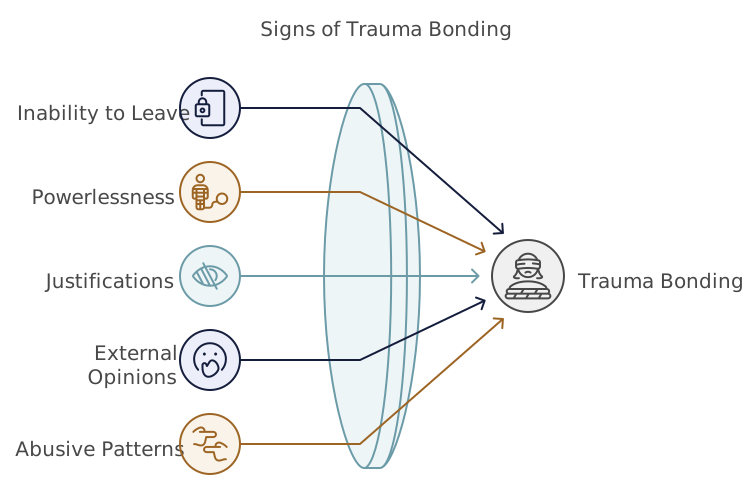
Trauma bonding occurs when a narcissist repeats a cycle of abuse with another person which fuels a need for validation and love from the person being abused. Trauma bonding often happens in romantic relationships, however, it can also occur between colleagues, non-romantic family members, and friends.
Before discussing how trauma can cause mental illness, it is important to understand that what may be traumatic to some, may not be traumatic to others. An incident that may be deeply distressing to an individual should not be invalidated based on the personal opinion of anyone else.

At AMFM, we strive to provide the most up-to-date and accurate medical information based on current best practices, evolving information, and our team’s approach to care. Our aim is that our readers can make informed decisions about their healthcare.

Our reviewers are credentialed medical providers specializing and practicing behavioral healthcare. We follow strict guidelines when fact-checking information and only use credible sources when citing statistics and medical information. Look for the medically reviewed badge on our articles for the most up-to-date and accurate information.

If you feel that any of our content is inaccurate or out of date, please let us know at info@amfmhealthcare.com